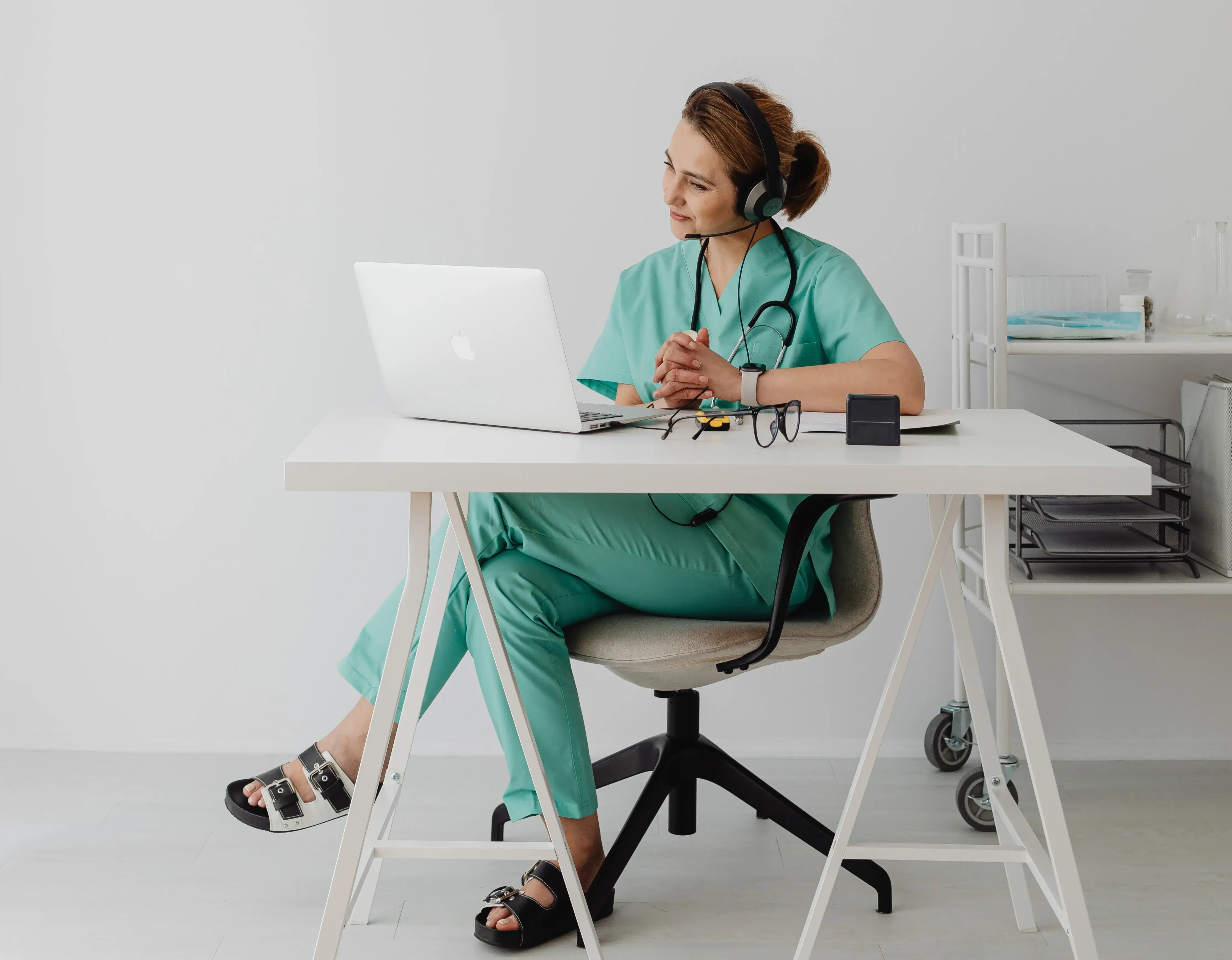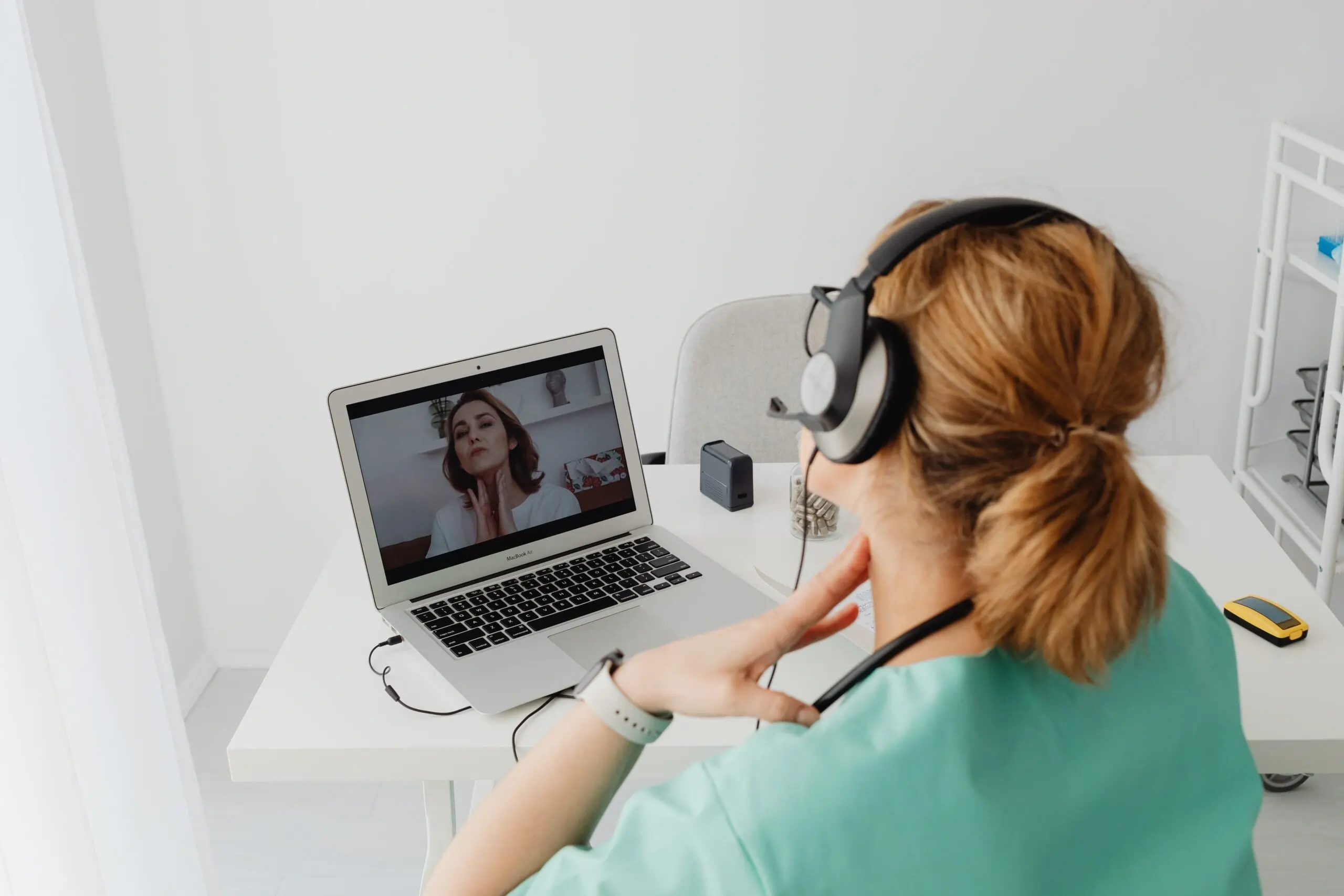


Telemedicine is becoming increasingly common among healthcare organizations of all sizes. Just 5-7 years ago, it was available only to huge networks and corporations. Still, as of 2026, nearly 50 million people in the United States already use remote patient monitoring devices. An MSI International survey shows that 4 out of 5 Americans support the use of RPM in medical care.
Thanks to high patient demand, more and more healthcare institutions are adopting technology-enabled care. But what is remote patient monitoring, really? In simple terms, RPM enables healthcare providers to remotely track patients’ health data via connected medical devices, wearables, and mobile apps.
Later, these systems automatically analyze and convert the data, so doctors can analyze it and modify a treatment plan.
In this article, we’ll explore how remote patient monitoring is used in 2026, which clinical scenarios benefit the most from RPM, and what healthcare organizations should consider when building compliant, secure, and scalable RPM platforms.
4 must-have features of remote patient monitoring platforms
In 2026, remote patient monitoring will become a core feature for many healthcare organizations. This adoption is especially relevant for those who manage chronic conditions and long-term patient monitoring programs.
A great remote patient monitoring solution must handle the complexity of the real world, serving different patient populations with varying levels of digital literacy while adhering to tricky regulations in complex clinical scenarios.
You need to understand that people now view telemedicine as a natural part of their lives. That’s why they have significantly higher RPM requirements. Let’s examine what your platform should have to remain successful in 2026!
Device-agnostic integration
You can’t just lock a remote patient monitoring system into a narrow ecosystem for a specific device group, like “can be used only on Linux PC” or “iOS only”. Any healthcare facility must be as flexible in its hardware and software as possible.
Modern technology evolves incredibly fast. But since it takes a long time for patients to get used to your platform, you need to create a system that will last at least 10-15 years without significant changes. So, your RPM solution must support a wide range of medical and consumer devices, from blood pressure monitors and glucometers to smartwatches and even headphones.
This architectural flexibility naturally leads to BYOD (Bring Your Own Device). Many patients already own smart medical devices, and forcing them to switch to clinic-issued hardware only increases friction, costs, and dropout rates.
From a technical perspective, BYOD-friendly infrastructure requires a flexible connectivity layer that can support different patient contexts and levels of digital maturity.
It means that your system should receive directly from the health-related devices with Bluetooth Low Energy (BLE) and cellular-enabled IoT devices. First options work well for patients who use smartphones, while cellular connectivity is critical for populations without access to stable internet or technical confidence.
AI-driven alerts and triage
As your remote patient management services scale, alert management can become overly complicated. Meanwhile, you must adopt systems that simplify your workflow, or there will be no logic in implementing these tools.
That’s why you should adopt smart alerting that goes far beyond basic threshold-based rules. Instead of triggering alerts for every out-of-range measurement, AI-powered telehealth systems analyze context and patient history to filter out false positives. These tools analyse patient-specific baselines to determine whether a situation is worthy of alerting a clinician.
To support day-to-day operations even more, advanced remote patient monitoring systems typically include a triage dashboard that automatically prioritizes patients based on real-time risk assessments. Patients are grouped into clear risk categories. It helps your team distribute workload and provide high-quality care for every patient.
Beyond immediate alerts, trend analysis can help your team to make their care more proactive. Many chronic conditions deteriorate gradually, with changes that are almost invisible when comparing measurements made within a week or two.
AI models analyze longitudinal data to detect slow but persistent shifts, such as steadily increasing blood pressure, worsening glycemic control over weeks, early signs of heart failure, etc.
Patient engagement tools
A remote patient monitoring program is only effective when patients actively participate in it. In practice, the most common limiting factor in RPM adoption is patients who forget to measure their health indicators.
Gamification of measurement routines reinforces consistency among users who don’t like to monitor their health. Simple mechanics such as streaks, progress indicators, reminders, and positive feedback help patients maintain their habits over time. If you think:
“But it will make my app look like Duolingo, but for health.”
It is exactly the goal of gamification. Measurement should become fun and entertaining. In the long run, it reduces drop-off rates, especially in long-term monitoring programs like Chronic Care Management.
Keep in mind that your app will be used by various demographics, from tech-savvy teenagers to elders. So, you must have a “simplified” version which includes large high-contrast fonts, linear user flows, voice prompts, and lower reliance on fine motor gestures. The easier it is to use your app, the better.
To ensure your patients understand how to properly take care of themselves, your platform should have contextual educational content tailored to the patient’s condition. Instead of generic tips, users must receive short, relevant guidance aimed at changing behavioral patterns.
This personalized feedback loop helps patients understand the purpose behind monitoring and encourages more informed self-care.
Billing automation (critical for the US market)
Any remote patient monitoring must be clinically effective and financially sustainable. Especially, it relates to the U.S. market with its complex billing and insurance system. Without built-in billing automation, telemedicine software often fails to scale due to administrative overhead and compliance risks.
A modern RPM platform must support automated time tracking aligned with RPM-related CPT codes, including 99453, 99454, 99457, and 99458. The system should accurately record:
- Time spent reviewing patient data
- Patient communications and follow-ups
- Care coordination activities related to monitoring
This tracking needs to be auditable and directly linked to individual patients and reporting periods, reducing reliance on manual logs and scattered spreadsheets.
Remember that RPMs should also provide automated report generation for insurance companies. These reports must include documented patient engagement and device usage, clinician interaction logs, and confirmation that billing criteria have been met.
By automating documentation and reporting, you reduce administrative burden, minimize billing errors, and improve reimbursement timelines.
Technical challenges and solutions
Even a properly designed healthcare RPM system can fail if the technology does not match how patients and care teams actually work. Patients may miss measurements, connectivity drops, and data accumulates faster than clinicians can review it.
When that happens, your doctors may drown in the noise generated by RPM apps. To prevent it, you need to examine your actual operational load and adapt to a new reality. This includes managing large volumes of data, handling unstable connectivity, and fitting into existing clinical workflows without adding manual work or fragmenting patient information.
Data overload
Remote patient monitoring systems generate continuous streams of sensitive physical data. Without proper filtering, this volume of information can quickly overwhelm clinical teams.
Doctors and nurses are already overwhelmed by their daily tasks. They want to see a short, usable summary that helps them make decisions quickly.
To make this possible, a remote patient monitoring platform has to sort data before it reaches the cloud. Edge computing plays a key role here. Processing data directly on the measuring device allows the system to filter out low-value measurements and detect early signals that actually require attention.
Modern remote patient monitoring platforms should collect raw measurements and turn them into structured reports. They must show trends over time using visual cues that make it easy to spot when a patient’s readings stray from their usual baseline. These cues need to be so clear that even a patient with no medical background will see that it’s time to book an appointment with the doctor.
Connectivity issues
Connectivity remains one of the most common yet underestimated risks. Remote patient monitoring tools require stable internet access. Unfortunately, not so many people have it. Just think about patients in rural areas, elderly users, or people in post-acute scenarios. These patients are less likely to follow the measurement schedule even if you gamify it.
To avoid gaps, modern RPM platforms should work offline and sync when a patient reconnects. Data stays on the device, and once the internet is available, it automatically transfers to the cloud. Connectivity choice directly affects patient adherence and data quality:
- Cellular IoT gives a consistent experience. Devices send data on their own using cellular networks. It’s easy for older adults, but it will cost more to implement.
- Wi-Fi devices are cheaper and can handle more data, but they rely on the patient’s home network. Set up and troubleshooting often fall on the patient or care team.
- Bluetooth (BLE) is common for wearables and medical devices because it uses little power. They collect data and transfer it to the phone via Bluetooth. The most common examples of it are fitness bracelets or smart glucometers for patients with diabetes.
In practice, successful RPM programs rarely rely on a single connectivity option. Instead, they combine multiple approaches to match patient capabilities, care settings, and clinical risk levels, ensuring reliable data flow without overburdening patients or care teams.
Interoperability with EHR
Remote Patient Monitoring delivers value when embedded in existing clinical workflows. When RPM data stays outside the Electronic Health Record, it does basically nothing for your healthcare organization. You are still facing fragmentation, duplication, and missed information.
In 2026, RPM data should never exist in isolation. Modern remote patient monitoring telehealth platforms are expected to integrate directly with EHR systems using FHIR-based standards. So, all measurements, alerts, and summaries will be exchanged in a structured, interoperable format that aligns with how clinicians already work.
Another crucial function is the write-back functionality. Clinically validated RPM results should be written directly into the patient’s EHR record, rather than remaining in a separate dashboard.
That way, you’ll get a single, consistent source of truth for patient data. Meanwhile, it reduces manual data entry, leading to fewer errors and better continuity of care.
Compliance and security in a remote patient measurement system
As remote patient monitoring platforms become more widespread, regulators pay closer attention to how these systems are built and operated. It means you are legally obligated to make your app secure and compliant even with the strictest regulations.
However, these requirements become stricter with each passing month. Regulators, especially in Europe, are increasingly focused on protecting patient data. As a result, regulations introduced in one region are often adopted globally over time.
Although GDPR is an EU regulation, many healthcare organizations in the United States choose to comply with it as well, especially when operating across borders or processing sensitive patient data from the EU. And since RPM systems analyze patient information, prioritize risk, and support clinical decisions, they are subject to strict healthcare regulations. In the United States, this includes FDA oversight for Software as a Medical Device (SaMD). Globally, it also means strict requirements around patient data protection under regulations such as HIPAA and GDPR.
FDA regulations for software as a medical device (SaMD)
As your RPM platforms evolve from passive data collection to active clinical support, you must ensure that they comply with all regulations. In the US, many advanced telehealth remote patient monitoring systems fall under Software as a Medical Device (SaMD) as defined by the FDA and the International Medical Device Regulators Forum (IMDRF).
FDA-compliant healthcare software is generally considered SaMD when it goes beyond displaying raw data and begins to analyze, interpret, or influence clinical decisions. Basically, your platform becomes SaMD if it has at least one of those features:
- Automated risk stratification or patient triage
- Detection of clinically meaningful trends or early signs of deterioration
- Alerts that prompt or recommend clinical intervention
- Decision-support outputs that influence diagnosis, monitoring, or treatment decisions
- Algorithm-based interpretation of physiological data
- Prioritization of patients based on calculated clinical risk
- Escalation logic that changes care pathways or response urgency
- Recommendations for follow-up actions, tests, or clinician review
Pure data transmission or visualization tools may fall outside the SaMD scope. But if your platform collects medical data and visualizes it, you must comply with FDA guidelines, since, according to regulators, patients use your platform intentionally to assess their health risks. RPM software may fall into different risk categories depending on the severity of monitored conditions, but still, you must obey the strictest regulations just to be safe.
Lower-risk remote patient monitoring software may follow a lighter regulatory path, while systems supporting chronic disease management or post-acute care often require more rigorous validation. In any case, you still need a platform that complies with the latest healthcare standards.
Remember that if your software is classified as SaMD, development should be controllable and traceable. So, you need to make a formal definition of intended use and clinical claims, documented risk analysis and mitigation strategies, verification and validation of clinical logic and algorithms. Also, you need to ensure that software lifecycle management is aligned with FDA expectations.
Data security (HIPAA / GDPR)
Remote Patient Monitoring platforms handle terabytes of highly sensitive data. In 2026, security failures carry legal, financial, and reputational consequences. It means that you need to ensure end-to-end data encryption to stay compliant with HIPAA and GDPR requirements.
Long story short, patient data must be encrypted both at rest and in transit, regardless of the devices patients use. Usage of a HIPAA-compliant software reduces the risk of interception and protects sensitive information even if a device is compromised, for example, when someone gains unauthorized access to a patient’s phone or tablet.
To keep data safe, an RPM platform should rely on strong encryption standards, secure key management, and strict access controls. Data in devices and in the cloud should remain unreadable without proper authorization, and communication channels must be protected end-to-end.
A GDPR-compliant RPM system must support consent management, data access requests, and the ability to delete or anonymize patient data when legally required.
Remote patient monitoring use cases in 2026
Remote patient monitoring has already become a crucial tool for many healthcare institutions. With these platforms, doctors can provide tailored care to the patients, as they can more easily detect early signs of deterioration and intervene before minor problems evolve into something more serious.
RPM (remote patient monitoring) platforms collect data and turn it into actionable insights, helping healthcare teams provide better care while keeping patients engaged and supported at home. The following use cases illustrate how RPM is transforming care delivery, improving outcomes, and streamlining clinical workflows across different healthcare settings.
Chronic care management (CCM)
Chronic care management is the most common use case for remote patient monitoring (RPM) systems. Many chronic conditions, including hypertension, diabetes, and heart failure, require constant attention to the tiniest details. With RPMs, your patients can provide your clinicians with daily measurements, so you can see their progress (or regress) over time. This consistent data stream makes it possible to detect early signs of deterioration that would otherwise go unnoticed between appointments.
A typical example of chronic care management is hypertension management. Instead of relying on irregular in-clinic blood pressure measurements, patients can do it at home a few times a day. The RPM platform continuously monitors patient data and highlights any sustained changes from their baseline. If it detects a potential issue, clinicians are alerted right away.
This ongoing feedback helps patients keep their blood pressure stable, avoids unnecessary medication adjustments based on incomplete readings, and lowers the risk of serious cardiovascular events.
Post-acute care (hospital at home)
Post-acute care is another important use case for remote patient monitoring devices and software. Even after patients are discharged after surgery to home care, they are still at high risk of complications. Healthcare institutions that want to build a reputation as trustworthy and patient-centered encourage their patients to continue monitoring at home using RPM tools.
By tracking vital signs, pain levels, mobility, and other recovery indicators remotely, clinicians can detect early warning signs of potential complications. Later, they alert patients and invite them to the consultation, where doctors will share changes to the care plan. This approach helps reduce readmissions, shortens hospital stays, and ensures patients recover safely in the comfort of their own homes.
Clinical trials (decentralized trials)
RPMs are becoming a key tool for decentralized clinical trials. Instead of requiring participants to travel to a research center, remote patient monitoring technology allows them to report symptoms, track vital signs, and record condition-specific measurements from home in real time.
This setup makes it easier to capture daily fluctuations and trends that are often missed during occasional offline visits. Patients will stay more engaged since they don’t have to take time off work or arrange transportation. This simplicity of care drastically reduces dropout rates.
At the same time, your healthcare team gets a continuous stream of reliable data, which helps them spot early changes, monitor side effects, and make more informed decisions. The most commonly used tools for such monitoring are home-use medical devices, such as blood pressure monitors or glucometers, and wearables like smartwatches. Many patients also use mobile apps to log symptoms and fill out questionnaires.
Why choose Corpsoft Solutions for RPM development
Every healthcare organization has unique workflows and patient needs, so a one-size-fits-all remote patient monitoring platform never works long-term. While you may spend slightly less time on launching, you won’t be able to personalize this system.
In case of off-the-shelf solutions, you’ll need to adapt workflows to fit the system, not the other way around. While this approach might be acceptable in industries like e-commerce, it creates unnecessary friction in healthcare with its already complex and highly regulated workflows.
That’s why it’s better to implement custom RPM development that allows healthcare providers to build technology around their existing clinical workflows. Instead of adding extra steps for clinicians, such systems simplify their work, removing extra burden.
Remote patient monitoring benefits go beyond collecting vitals. Instead of digging through data, clinicians will get actionable insights. Meanwhile, it leads to faster feedback to the client, which results in better treatment, smoother operations, and a system that actually supports long-term care delivery.
Corpsoft Solutions builds RPM platforms with these realities in mind. We focus on practical, secure, and scalable systems that support long-term care delivery. One of our flagship projects, the “Remote Patient Monitoring Platform for Chronic Care Management,” demonstrates our expertise:
- Technologies and integration: Flutter, Laravel, and API-based architecture enable seamless integration with systems like GenieMD and third-party referrals.
- Compliance and security: HIPAA-compliant SSO, end-to-end encryption, and secure patient and provider data handling.
- Patient-centered UX: We design a user-friendly platform that works incredibly well for tech-savvy patients who want to use advanced features, as well as with elders who need a basic telehealth app.
- Automation and intelligence: Role-based access, automated scheduling, patient journey management, and cognitive assessments that streamline remote monitoring.
- Impact: This tool improves patient care through continuous monitoring via automated follow-ups and higher patient satisfaction thanks to easy-to-use interfaces and timely clinical feedback.
We know how to properly implement CPT code functionality, choose the best RPM business model for you, and take care of IoT, BLE, and Big Data integrations. This combination of clinical insight, technological know-how, and patient-focused design allows us to deliver RPM platforms that truly work in practice.
As remote patient monitoring continues to evolve, Corpsoft Solutions is committed to building scalable, secure, and future-ready platforms that grow with your organization and keep pace with healthcare trends.
Final thoughts
Remote Patient Monitoring has finally become an inseparable part of patient care. Healthcare organizations that treat RPM as a core tool spend less time on treatments, while still improving their reputation as tech-savvy organizations.
At the same time, you can call RPM implementation successful only if your patients regularly use this tool in their daily lives. Only once clinicians collect enough data about a patient’s health can they adjust the care plan. And it’s the actual value of such platforms, as they allow your team to spend less time on each patient while continuously improving the quality of care.
This is where custom RPM development can help you. Off-the-shelf solutions rarely reflect how real clinics operate or how care is delivered day to day. Custom-built platforms allow healthcare providers to integrate RPM into existing processes, comply with evolving regulations, and adapt as clinical and business needs change.
Instead of forcing teams to work around the software, custom RPM solutions create long-term value by supporting clinicians, engaging patients, and making remote care truly effective.
Want to implement a Remote Patient Monitoring solution that truly improves clinical outcomes and increases your clinic’s revenue? We know how to build compliant, patient-friendly systems that fit real clinical workflows. Talk to Corpsoft Solutions experts about your RPM idea, and we’ll help you implement it.
Share this post: