



How to Choose a HIPAA-Compliant Pediatric Therapy Software
Working with pediatric data is immensely complex. Every record contains a ton of personal information that can expose the child and their parents: from health history and therapy notes to developmental milestones.
A single oversight, missing record, or unauthorized login can disrupt patient care and expose sensitive data. To protect both patients and your practice, choose software that fully complies with HIPAA and meets the highest cybersecurity standards.
Why HIPAA is so important for pediatrics
The Health Insurance Portability and Accountability Act (HIPAA) is a U.S. federal law designed to protect patients’ medical information. Frankly speaking, it’s the set of rules that describes how exactly any healthcare-related business should handle patient data.
While you may face severe fines from government structures for a data breach, the breach itself has even more severe consequences. It can jeopardize the credibility of your practice, potentially causing you to lose ALL your clients.
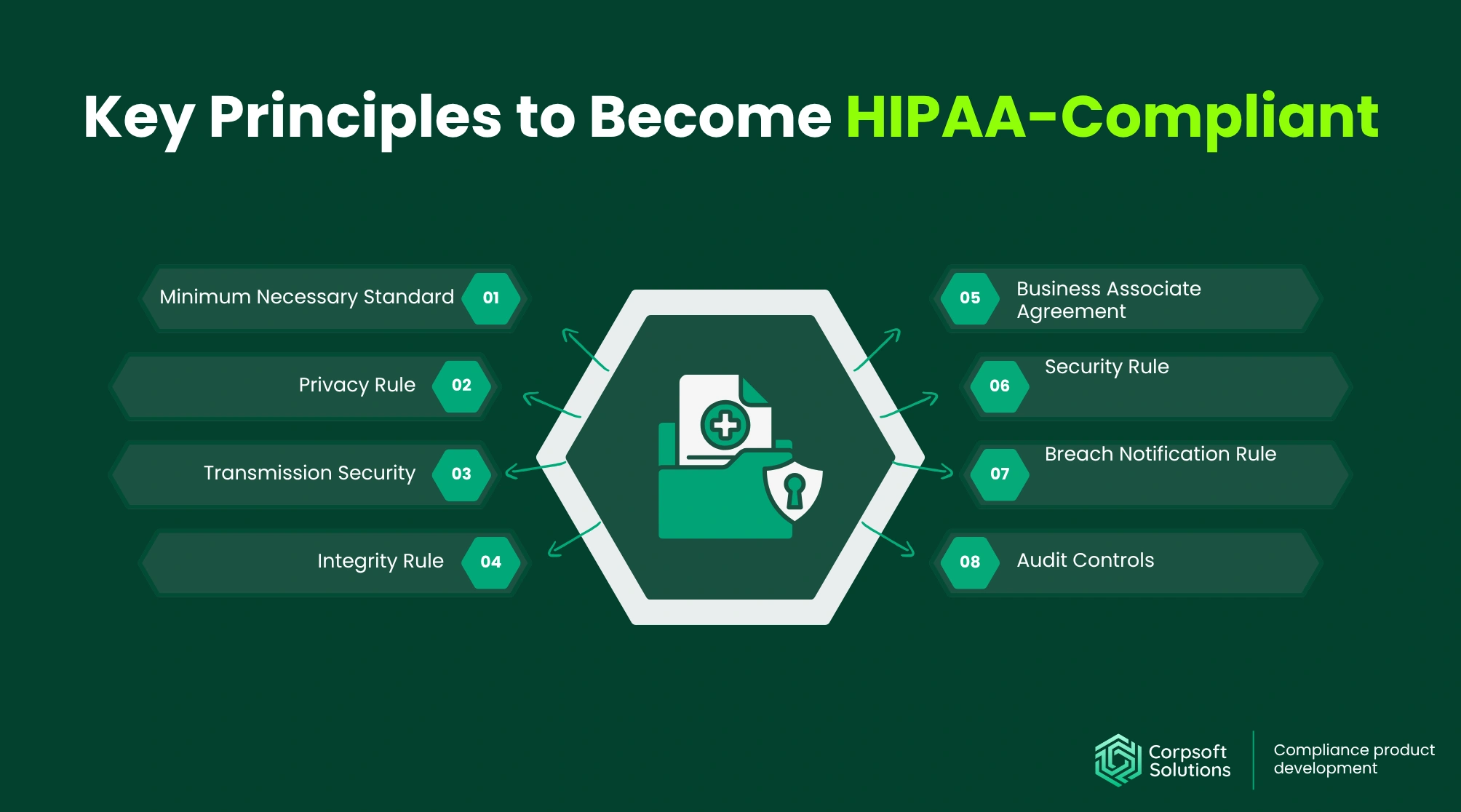
To become HIPAA-compliant, any pediatric therapy practice must follow key principles that we’ve gathered in the table.
| HIPAA Rule / Principle | What It Means | How It Applies in Pediatric Therapy |
| Privacy Rule | Defines who can access, use, and share Protected Health Information (PHI). | Only authorized parties can view the data. |
| Security Rule | Requires administrative, physical, and technical safeguards to protect electronic PHI (ePHI). | Software must include data encryption, secure logins (e.g., 2FA), automatic logouts, and access logs for every user. |
| Breach Notification Rule | Any data breach should be reported to patients and the U.S. Department of Health and Human Services (HHS). | If there is a leak, you must notify families and submit detailed documentation of the breach to regulators. |
| Business Associate Agreement (BAA) | A document between a healthcare provider and any vendor that handles PHI, confirming both comply with HIPAA. | Every therapy software vendor must sign a BAA before handling patient information. |
| Minimum Necessary Standard | Share or view only as much PHI as you need to get the job done. | Therapists or assistants should only see the information relevant to their role. |
| Audit Controls | Systems must log all access and actions performed on PHI to detect unauthorized activity. | The platform should track who viewed, edited, or exported patient data, and when. |
| Integrity Rule | Ensures that PHI is not altered improperly. | The system must prevent unauthorized edits or deletions in patient notes and maintain version history. |
| Transmission Security | Protects PHI while being sent electronically (e.g., emails, file transfers). | All communications between patient and medical practice must use encrypted channels (SSL/TLS). |
In adult therapy, doctors typically share the information between the clinic itself, the patient, and insurance. Meanwhile, childcare therapy normally has more stakeholders, which may include even schools. So, you should be much more cautious than with adult care.
Risks of using non-HIPAA-compliant tools
Choosing cheap, non-compliant applications may seem cost-effective, but it’s a ticking time bomb that leads to reputational damage, fines, and the closure of your practice.
Data breaches and unauthorized access
Such platforms typically lack encryption and access control. It means that it’s easy to access sensitive files. So, cybercriminals will use this vulnerability to steal the data. Later, they can use it for blackmail or identity theft. And as you remember from the timeless classic “Identity theft is not a joke”.

So, your task here is to prevent it with the strictest measures.
Financial penalties and legal liability
HIPAA is a strict law, where fines can range from hundreds of dollars for minor violations to millions for serious incidents. The Office for Civil Rights (OCR) regularly investigates healthcare institutions to determine whether they work properly with data.
Remember, financial penalties are the least severe consequence. Some violations can result in lawsuits, terminated partnerships, and mandatory corrective action plans. If you decide to repeatedly break the law, it can cost you millions of dollars or even your license.
Loss of trust and professional credibility
Parents entrust you with the child’s medical history since they believe that you securely store it. If you face even the smallest breach or leak, they will immediately lose their trust in you.
Even if there was no serious damage, the perception of risk alone can drive families to seek care elsewhere. In the social media age, information about business negligence spreads within minutes.
A single negative experience shared online can affect how future clients view your practice. Unlike regulatory fines, reputational damage has no fixed cost. Sometimes, it could take years or even decades to rebuild everything.
Disrupted continuity of care
Accurate, consistent documentation keeps every child’s therapy on track. When a system isn’t HIPAA-compliant, it doesn’t have protected data storage or regular backups. Over time, it results in the disappearance of records. And since everything is stored online, parents don’t even have a PDF for some physical “backup”.
In pediatrics, where progress unfolds over years, losing even a single session note or report can disrupt treatment, delay insurance approvals, and add unnecessary stress. Nobody wants it. That’s why you should use a HIPAA-compliant software that automatically backs up records and logs every change.
Key criteria for choosing HIPAA-compliant pediatric therapy software
If you want your practice to remain successful, you need to choose reliable software. While there are other crucial factors, such as therapist competency and insurance partners, in the digital age, you are fully dependent on your software.
So, even if you hire the best staff, but have outdated digital systems, your practice is still at risk. The best HIPAA-compliant software ensures that the data is:
- Secure, as it is stored and transmitted safely.
- Easy to use, as doctors and parents can get it in a few clicks.
- Transparent to parents, as they have controlled access to updates, resources, and reports without compromising privacy.
When evaluating systems, look beyond marketing claims and ask vendors how their platform manages encryption, permissions, integrations, and daily workflows. The right choice will reduce administrative burden, improve care coordination, and show parents that you are worthy of trust.
Data protection and security
Children’s health records include developmental assessments, videos, family communication logs, and other sensitive data. A breach can damage a child’s future privacy, cause psychological harm, and erode the family’s trust in healthcare providers.
To ensure that customer data will remain protected no matter what, your clinic should run on a HIPAA-compliant software with:
- End-to-end encryption both at rest and transit
- Secure cloud infrastructure, so examine vendor provides a BAA (Business Associate Agreement)
- Role-based access control with defined roles and limited exposure
- Audit trails and monitoring, where every access, edit, and data export must generate a timestamped audit log
- Regular security audits and updates. Cybercriminals are getting smarter, so HIPAA is also becoming stricter
- Secure communication channels where your therapists communicate with parents and schools
Access control and user management
As we said, access control is one of the most critical components of HIPAA compliance. Pediatric practices often involve multiple stakeholders, from therapists and administrative staff to parents and even schools.
Not everyone in a pediatric therapy clinic needs the same level of access. Therapists, administrative staff, and billing specialists each interact with different parts of a child’s record.
Keep your institution safe by implementing Role-Based Access Control and Multi-Factor authentication (MFA). Even if someone compromised their credentials, there is still almost no chance of unauthorized access.
Integration with existing systems
Most healthcare institutions rely on Electronic Health Records (EHRs), billing platforms, telehealth services, Customer Relationship Management tools (CRMs), and more. If your staff can access all of it from a single dashboard, they are most likely to ignore data entry where it’s possible.
Connecting your therapy software across clinics gives every provider a clear picture of a child’s progress. Teams can collaborate without miscommunication or lost files, ensuring smoother care and more consistent results.
Ease of use in clinical workflow
If your platform is too complex, doctors and nurses just avoid using it. Yes, it is as simple as it sounds. So you should use only user-friendly software that sticks to the latest cybersecurity regulations.
A well-designed platform enables therapists to record session notes, monitor progress, and update developmental milestones. Customizable templates, drag-and-drop scheduling, and built-in telehealth tools streamline administrative tasks, letting clinicians dedicate more time to patient care.
Billing, reporting, and documentation
Each session generates a lot of sensitive data that you need to store. Non-compliant systems may glitch, resulting in incomplete records, misfiled documents, or lost billing information. In the long run, they can cause insurance claim denials, delayed reimbursements, or regulatory penalties.
HIPAA-compliant software comes with billing and reporting features. Automated claim generation, session tracking, and customizable report templates reduce manual data entry.
It minimizes the human error factor and preserves continuity of care. Therapists can easily retrieve a child’s history, review previous goals, and share structured progress updates with other specialists.
Examples of features that simplify therapists’ work
Just like we said before, even if you are having the most secure app ever, no one uses it if it doesn’t have an intuitively clear interface. So, if you really want to make things work, you need to ensure that the future solution actually simplifies the workflow of your staff.
Online scheduling and telemedicine
Many practices use TheraNest or SimplePractice. Those services allow parents to book appointments and reschedule them online. Meanwhile, therapists can see their full schedule, block off time, and avoid double bookings.
Telemedicine integration (Zoom for Healthcare, doxy.me, or built-in video tools) lets therapists conduct secure virtual consultations. It’s especially useful for practices that work with families who live in remote locations and can’t visit doctors as frequently as they want.
Parent communication tools
Therapists often need to keep parents in the loop, but it’s too risky to send updates through email or DMs on socials. You, as a healthcare facility, need to implement safe yet fast communication tools such as CareMonkey or CentralReach. Here, doctors can send updates, progress charts, or therapy exercises directly to parents. It keeps families informed and confident in their child’s progress.
Automated reporting and documentation
Reporting tools save your doctors hours of manual work. Here are just three of the most common examples:
- Progress notes templates allow them to fill in developmental goals, select observed behaviors, and generate standardized reports.
- Billing integration automatically generates insurance claims based on completed sessions.
- Outcome tracking dashboards provide a visual overview of a child’s progress over time.
These simple solutions save hours of a doctor’s work, as they don’t need to manually enter session notes, create reports, and check charts. This extra time could be spent on direct therapy, planning personalized interventions, or training staff.
Life-saving tips for choosing a vendor
While evaluating a HIPAA-compliant pediatric therapy software vendor, you need to examine whether you are sharing the same “vibe”. While this recommendation may sound unprofessional at first sight, in reality, it’s one of the most reliable predictors of a successful long-term partnership.
A vendor that truly understands the emotional, ethical, and logistical realities of pediatric care will communicate differently. They will be interested in you as an actual partner. They will ask about your therapy workflows, and they may suggest customizations based on your team’s size and specialties. Most importantly, they will be transparent about what they can deliver and what features may take far more time to implement than expected.
Thus, you should look for a partner who treats your clinic as a care provider with unique challenges. Notice how they handle your first few conversations:
- Do they respond clearly and promptly?
- Do they provide you with the actual fine print with all technical details?
- Do they ask about how you want to track progress, share updates with parents, or handle data handovers between therapists?
Ask them to verify their HIPAA compliance by requesting them to provide a Business Associate Agreement (BAA). Without it, even the most secure-looking system cannot work with PHI. Ask vendors to provide details about:
- Their encryption standards (AES-256, TLS 1.2 or higher).
- Cloud hosting providers (AWS, Google Cloud, Azure) and whether they offer HIPAA-compliant instances.
- Security audits or certifications, such as HITRUST or SOC 2 Type II.
A serious vendor will be transparent about these details and have documentation ready. Ask how easily the system integrates with your existing EHR, billing software, or telehealth tools. A vendor should provide open APIs or native integrations that prevent data silos. Don’t forget to ask them who owns the data.
A reputable provider should guarantee that you retain full ownership of all records and can export them anytime. If a vendor avoids answering or charges large export fees, it’s a red flag. If you are still unsure how to choose the proper vendor, use our cheat sheet.
What to examine in the fine print
When reviewing a vendor’s contract or terms of service, look beyond the marketing promises. The fine print often hides conditions that could impact your data ownership, costs, and legal compliance. Here’s what to pay close attention to:
| Area | What to Check | Red Flag |
| Data Ownership | Ensure your clinic retains full ownership of patient data and can export it anytime. | The vendor owns or limits access to your data. |
| Data Storage & Backups | Verify where data is stored (preferably in the U.S.) and whether automatic encrypted backups are performed. | No mention of storage location or backup frequency. |
| Service Level Agreement (SLA) | Check uptime guarantees (at least 99.9%) and response times for critical issues. | No SLA or vague promises like “as soon as possible.” |
| Termination Policy | Determine what happens to all the data and account access if you cancel. | Data deletion without notice or export options. |
| Hidden Fees | Review for setup, integration, or per-user charges not listed upfront. | Unclear or constantly changing pricing model. |
| HIPAA Compliance Evidence | Look for a signed Business Associate Agreement (BAA) and audit documentation. | The vendor refuses to sign a BAA or provide audit proof. |
| Third-Party Integrations | Ensure integrations (e.g., with EHR or billing software) are covered by the vendor’s HIPAA safeguards. | “Use at your own risk” clauses for integrations. |
| Customer Support | Verify support availability (24/7 vs. business hours) and escalation procedures. | Only email support has long response times. |
| Product Updates | Ask how often updates occur and whether downtime is announced in advance. | Frequent unannounced updates that disrupt workflow. |
Final Thoughts
Protecting patient data helps you to become an industry leader in your area. As parents would know that you are having the best doctors and use reliable HIPAA-compliant software, they are more likely to trust you for decades to come.
By leveraging the latest security measures and following HIPAA standards, you minimize both human error and cybersecurity risks, while demonstrating responsibility toward your patients and partners.
The key to success is to stay proactive, regularly audit your systems, and train your staff to recognize vulnerabilities before they become threats. The more foresighted your approach to data protection, the safer your practice will be.
Are you looking for a reliable solution to securely store patients’ data? Contact the experts at Corpsoft Solutions, and we’ll help you choose and tailor a HIPAA-compliant solution to your needs.
Share this post: