


HIPAA Audit and ISO 9001: Compliance Essentials for Incident Reporting Software in Healthcare
In healthcare, even the slightest mistake can have serious consequences, potentially affecting a patient’s health or safety. But even if the error doesn’t damage the client’s health (only their wallet or schedule), you may still face reputational and financial damage.
That’s why you need to comply with all the latest regulations to minimize the risk of incidents. Two of the most crucial standards in this regard are HIPAA and ISO 9001. Together, they help you reduce risks, build trust with patients, and maintain operational excellence. Without further ado, let’s examine how to pass an ISO 9001 and HIPAA compliance audit successfully.

The importance of HIPAA and ISO 9001
When it comes to patient reporting, there is no escape from these two regulations. HIPAA ensures data security, while ISO 9001 guarantees that you effectively handle any situation in your clinic. Together, they transform an average reporting software into a reliable tool that protects everyone in your clinic.
HIPAA (Health Insurance Portability and Accountability Act)
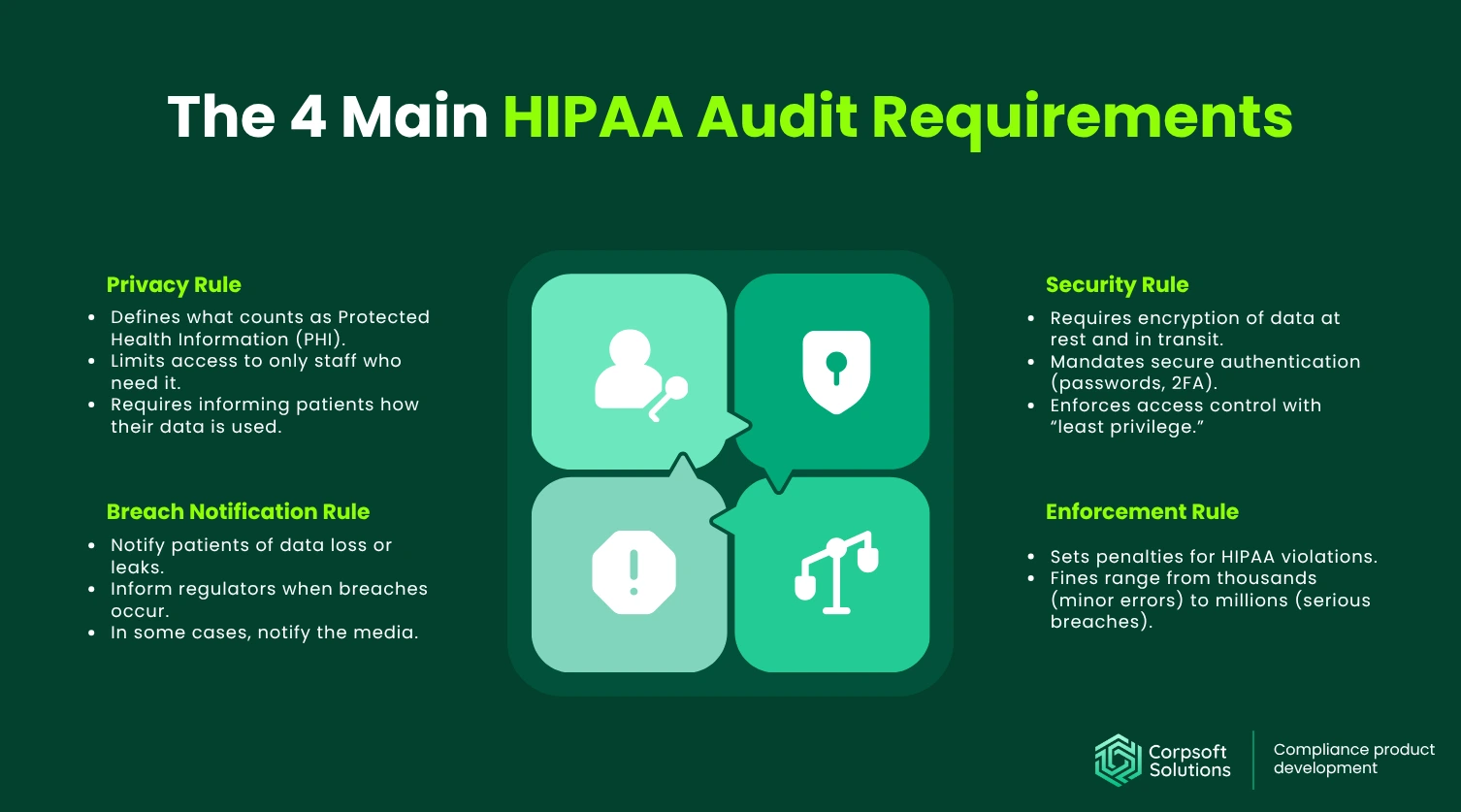
It’s a U.S. law that regulates how exactly you should handle patients’ medical information (Protected Health Information (PHI)). The main goal of this regulation is to ensure the confidentiality, integrity, and availability of patient data. The four main HIPAA audit requirements are:
- Privacy Rule: Defines what constitutes protected information (including name, date of birth, test results, medical history, and insurance numbers) and limits access to only those staff members who require it to perform their duties. To ensure that you pass the HIPAA privacy audit, you must inform patients how you use their data.
- Security Rule: Establishes technical and organizational requirements for safeguarding electronic Protected Health Information (ePHI). You need to encrypt data at rest and in transit, implement secure user authentication (including passwords and two-factor authentication), and enforce access control based on the principle of “least privilege” or “minimum necessary.”
- Breach Notification Rule: You must notify patients, regulators, and, in some cases, the media if data is lost or leaked.
- Enforcement Rule: Establishes penalties for violations, ranging from thousands of dollars for accidental mistakes to millions for severe breaches.
To pass a HIPAA audit, you should securely store data and log all actions related to patient records. Otherwise, you make your clinic a tempting bait for cybercriminals who want to steal patient data for blackmail.
ISO 9001
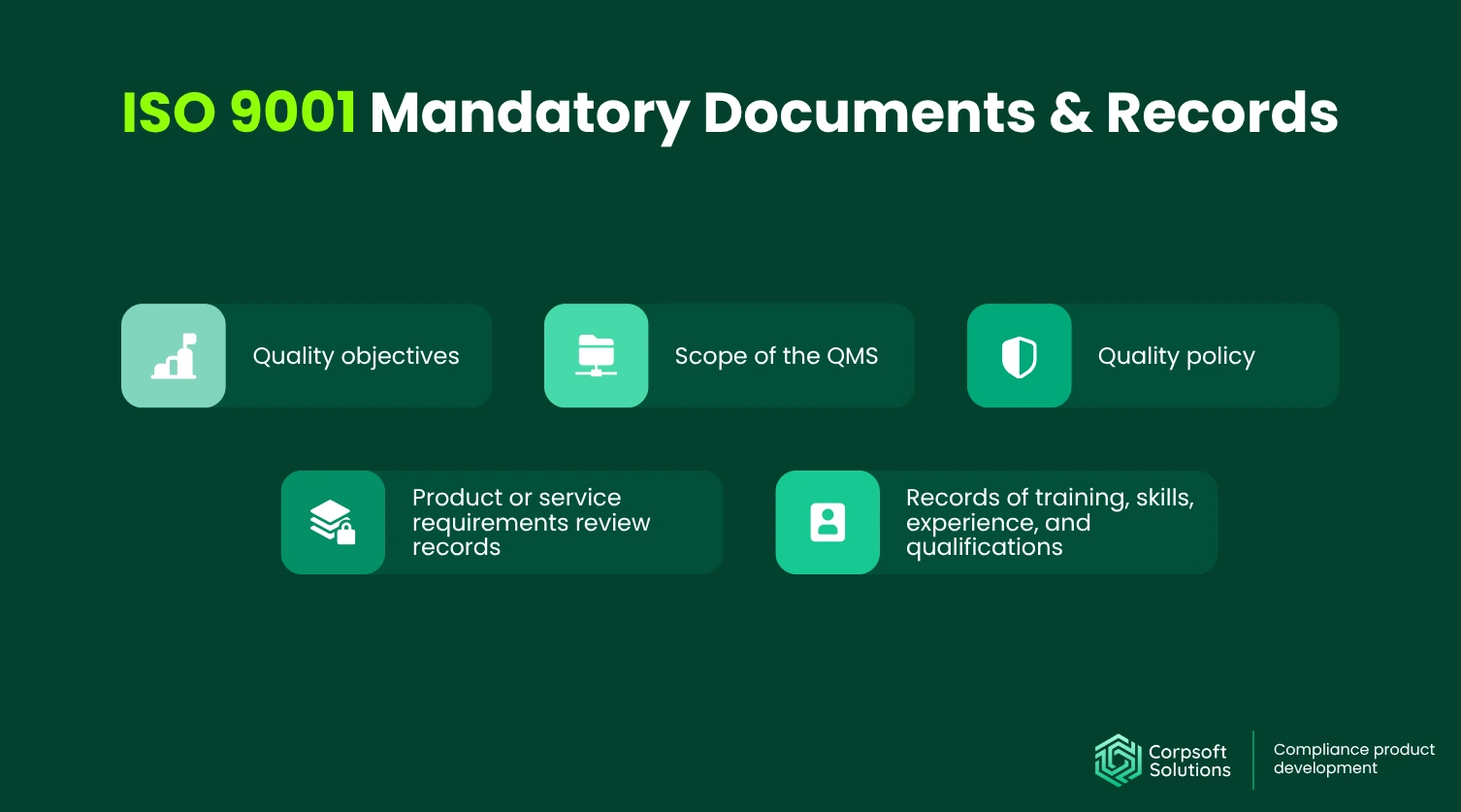
It’s an international standard for Quality Management Systems (QMS). This standard ensures that your clinic follows strict quality care processes, so patients can be sure that you are an extremely responsible institution.
ISO certification consultants help you ensure you properly define, document, and improve all your internal procedures. While you may still try to check yourself, remember that even the slightest mistake can cost you a fortune. Thus, it’s better to trust professionals during iso 9001 certification process:
- Patient focus: Patients here are seen as the “customers.” Every process should strive to improve both its safety and the quality of care.
- Process approach: Every action should follow a clear procedure. An ISO 9001 consulting manager helps you ensure that you follow standardized incident resolution.
- Transparency and documentation: All actions must be logged with full details, including a description, the actions taken, and the responsible staff member. Proper documentation ensures accountability and helps prevent recurrence.
- Analysis and continuous improvement: Don’t treat incidents as disasters. Remember that they are opportunities to grow. ISO 9001 requires you to analyze not the incident itself, but what caused it and how to prevent similar situations in the future.
In real-life situations, becoming ISO 9001 certified means that you have standardized workflows, where everyone in your clinic follows the same rules. Your organization should always be ready for unexpected audits. Therefore, it is essential to continually improve your institution and collaborate with an ISO 9001 consultant to ensure compliance with the latest standards.
Key Compliance Requirements for Incident Reporting Software
If you want to have a tool that benefits your business, you need to find software that helps you prevent incidents. HIPAA and ISO 9001 compliance safeguards patient data, ensuring your internal processes remain structured, consistent, and continually improve.
Patient Data Storage and Access (HIPAA)
Any patient report typically includes a lot of Protected Health Information (PHI) such as names, dates of birth, diagnoses, test results, or treatment details. If this information becomes publicly accessible, it’s considered a HIPAA violation.
While it jeopardizes patient data, such negligence can result in millions of dollars in fines. To prevent this, you need to stick to the HIPAA audit protocol, which includes:
- Data encryption at rest and in transit.
- Enforcing the minimum necessary rule for data access.
- Implementation of multi-level protection and secure authentication.
- Detailed access logs to track every login, view, or edit attempt.
In short, HIPAA safeguards patient data while ensuring that your incident reporting system stays reliable during critical events.
Instant Verification of Incident Reports

Incident reporting software only works if you fully trust your records. It means that you need to ensure that every entry is accurate and safeguarded against manipulation.
That’s why you need to use ISO 9001 software that verifies who created the record, when it was created, who viewed and edited it, and when these actions occurred. You should track every change, since it’s the only way to stay safe in a world full of potential cybercriminals.
Auditing and User Activity Tracking
To keep your incident reporting software under control, you need to log EVERY action. The system should record:
- Who did what, and when.
- Creating, editing, deleting, or viewing records.
- Any changes made to incident details.
According to the HIPAA audit protocol, logs must be tamper-proof, ensuring that no one can access them without permission or cover up their activity.
Internal Procedures and Quality Policies
The ISO 9001 current version states that every process in your organization is structured, controlled, and aimed at continuous improvement. In the case of incident reporting software, this means that each procedure should be fully documented. Yes, even those who didn’t leave due to incidents.
It’s better to be safe than sorry.
ISO 9001 certification consultants help you standardize workflows by creating unified rules throughout your clinic, reducing errors, and making everything transparent and comparable. Every team member should know their roles and responsibilities: who records, who verifies, who approves. It eliminates chaos and ensures smooth operations.
Benefits of HIPAA and ISO 9001 compliance for your clinic
Investing in compliance helps your clinic to become a place where people choose to care for their health, now and for the future. While some worry about the ISO 9001 cost, the long-term return far outweighs the initial expenses.
Robust data protection
Clinics handle vast volumes of sensitive data on a daily basis. If hackers gain access to it, they can leak, sell, or use it for blackmail purposes. Such breaches can severely damage patient confidence and the clinic’s reputation.

HIPAA audit ensures that your clinic protects patient information, enforces strict access controls, monitors every action, and prevents unauthorized use. By integrating these rules into your incident reporting software, you can maintain both data integrity and trust.
Reducing the Risk of Fines and Legal Liability
Refusing to undergo a HIPAA privacy audit can result in fines ranging from tens of thousands to millions of dollars. Additionally, clinics face the risk of lawsuits from patients whose rights were compromised due to data leaks or the negligent handling of information.
HIPAA compliance is mandatory for healthcare organizations. Non-compliance can result in significant financial penalties and operational restrictions that may threaten business continuity.
ISO 9001 maintenance adds its own layer of requirements. Keep in mind that neglecting them can result in losing certification or even contracts, especially on international projects.
Boosting Trust for Staff and Patients
When incident reporting is too complex, staff may refuse to use it. Staff adoption increases when incident reporting software is positioned as a tool for quality improvement rather than merely as an error-tracking system. Once they understand that this software is their friend, not their enemy, they are more likely to utilize ISO 9001 quality management software in their daily work.
With detailed logs, verification, and clear policies, reporting becomes easy and fair for everyone. For patients, your adherence to ISO 9001 calibration requirements sends a powerful message: this clinic doesn’t sweep issues under the rug.
Regular Audits and Continuous Improvement
By documenting and verifying every action, your incident reporting system becomes ready for unexpected ISO 9001 and HIPAA third-party audits. You can see who did what and when, and monitor how exactly your team resolves incidents with staff tracking software.
This transparency keeps your team accountable without assigning blame. These data-driven insights enable you to identify recurring patterns, uncover root causes, and implement targeted improvements to prevent future incidents. Perhaps some incidents occur due to training gaps or technical issues, so you address these issues on your own, ensuring that you fulfill all the requirements of the HIPAA security audit checklist.
How to check your compliance readiness

When a clinic implements reporting software, it’s not enough to just trust the vendor’s claims about HIPAA and ISO 9001 compliance. You should conduct an internal review to determine if this specific system is a suitable fit for your needs.
Before facing an external ISO 9001 or HIPAA compliance auditing, we highly recommend that you check everything on your own. You can hire ISO consultants to facilitate this process and ensure that you do everything correctly. It helps you to lower the risk of penalties, lawsuits, or losing patient trust.
However, it is still recommended to use a HIPAA audit protocol checklist to ensure you are doing everything correctly.
|
Audit Area |
Best Practice (How to Prepare) |
Typical Fail (How to Mess Up) |
| Data Access Control |
|
|
| Data Encryption & Transmission |
|
|
| User Action Logging |
|
|
| Documented Policies & Procedures |
|
|
| System Updates & Maintenance |
|
|
| Staff Training |
|
|
If you answered “no” or “not sure” to even one point, your system is not yet ready for a HIPAA or ISO 9001 audit. That means you either need to strengthen internal processes or demand fixes from your vendor before it’s too late.
Even modern systems can have security gaps. A HIPAA internal audit checklist ensures that patient data is confidential, so even if someone tries to breach your system, they find nothing. ISO 9001 consultation helps you to ensure that all measures improve your performance and service quality without punishing your staff.
Practical tips for implementing and maintaining ISO and HIPAA compliance
Everything starts with a dialogue with your team. You need to explain to them that these new standards are their friends, not their enemies. Even the most advanced system will not deliver results if employees refuse to use it.
Use ISO 9001 consultancy services, so external experts help you in this journey. You can also ask them to conduct training for your staff, where they practice real-life response strategies, simulate actual incidents that may happen in your clinic, and teach how to recognize early signs of data leaks.
An ISO 9001 consultant can also help you select the software that best suits the needs of your clinic and your approximate budget. Remember that you need to precisely evaluate each aspect of your future tools, as you will work with them for years or even decades to come. It’s better to spend a few extra weeks evaluating different ISO 9001 software rather than adopting software that doesn’t suit your needs in the long run.
When planning for regulatory readiness, many clinics underestimate the impact of HIPAA compliance audit costs. The expenses go beyond the audit fee itself and often include staff training, system upgrades, policy updates, and external consulting. However, these investments are far smaller compared to the financial penalties and reputational damage. Treating the audit cost as a strategic investment helps ensure long-term stability and trust in your medical practice.
Another key component is internal control. Even with certified software in place, you still need to conduct internal tests, where you examine your clinic and the chosen software to ensure it meets your needs. Instead of waiting for an external review, make internal audits a routine part of your process. It helps you spot potential weaknesses even before they potentially damage you. Following ISO 9001 internal audit requirements, these reviews should be structured, well-documented, and focused on both processes and outcomes.
Final Thoughts
Achieving HIPAA and ISO 9001 obedience is far more than just regularly updating your healthcare software. Actual compliance occurs when your clinic establishes a secure, reliable, and future-proof healthcare environment for both your staff and patients.
Regular internal audits, clear documentation, and continuous staff training will help you stay ready for any external review. Partnering with ISO consultancy services gives you expert guidance on software selection, implementation, and long-term maintenance.
Discover how to ensure compliance and enhance patient safety with effective incident reporting software together with Corpsoft Solutions. Our team not only provides expert ISO consultancy but also helps you design and implement fully compliant software tailored to your clinic’s needs.
Share this post: