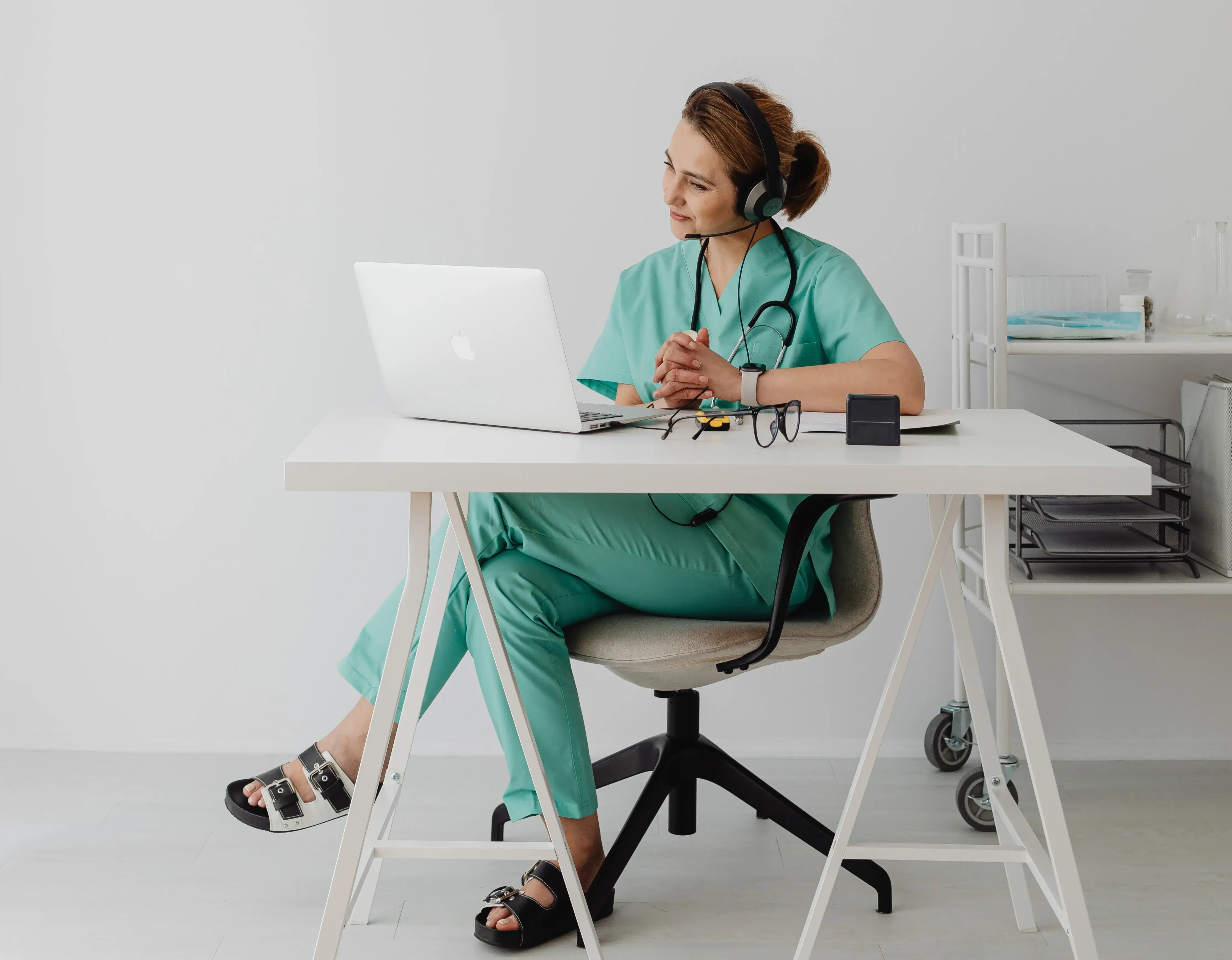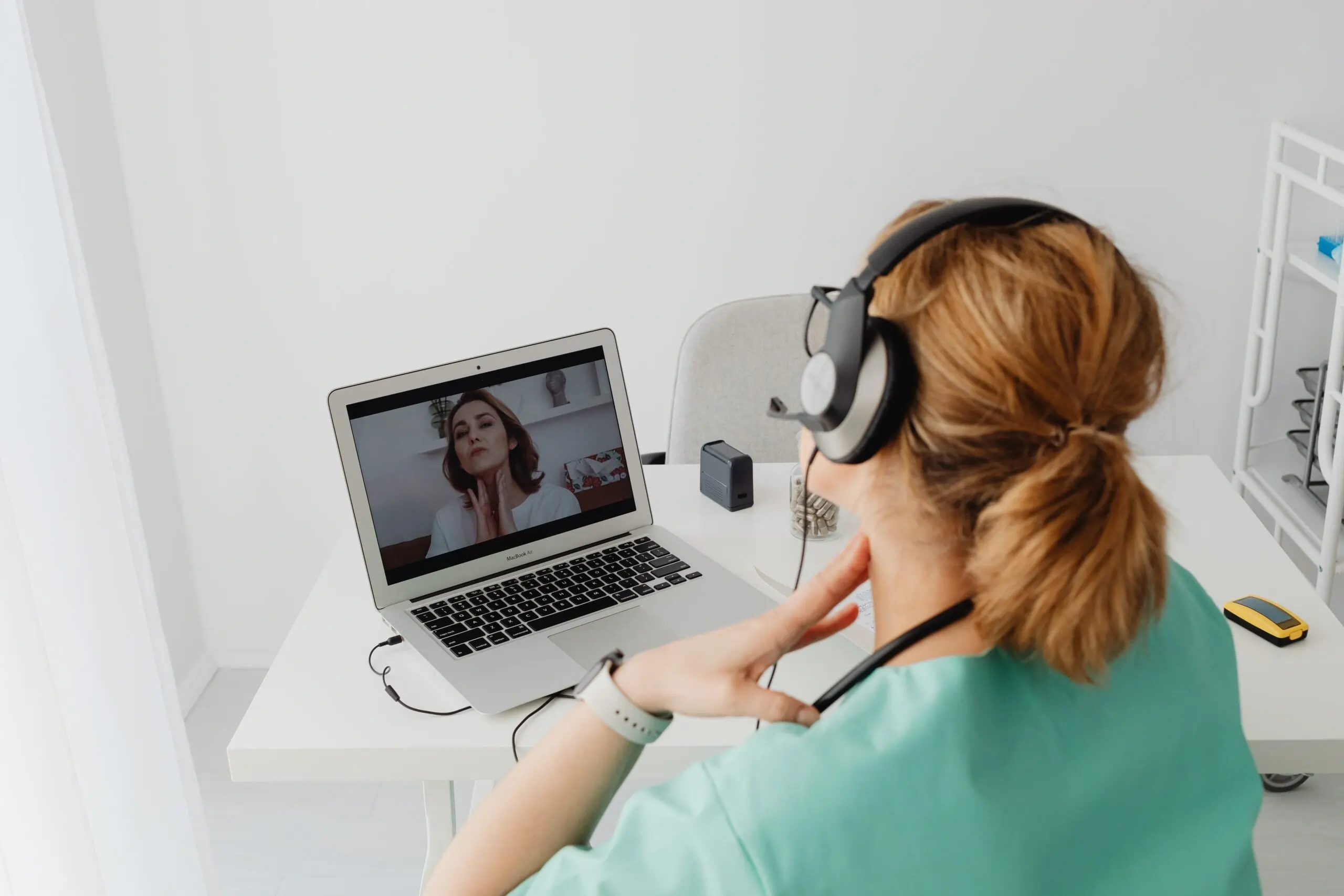


A few years ago, telemedicine mostly meant just making a quick phone call to a doctor. But now patients want a whole remote experience, including easy access to their medical data, seamless communication, and clear guidance throughout their care journey. Are you sure that you can provide it?
Your telehealth software must tick all the boxes, from the latest AI-powered healthcare tools and full compliance to supporting your actual workflows and providing a user-friendly experience. So, today, we’ll explore how telemedicine has evolved, what baseline requirements for 2026 are, and how your telehealth app should look and feel.
The evolution of telemedicine: from the 20th century until today
Telemedicine didn’t just appear during COVID. It existed even in the 20th century, but the pandemic forced it into the mainstream. Just 10 years ago, telemedicine looked like a quick Skype call between the doctor and the patient. Now, it has become a core healthcare service.
A nationwide US survey of over 4,500 adults found that more than 60% knew their primary care provider offered telemedicine, with over 60% willing to use it with their own provider. It reflects shifted expectations as many patients now view that type of care as a standard part of their healthcare experience rather than an emergency-only alternative.
But a basic video call isn’t enough anymore. Patients want a comprehensive telehealth app that provides a smooth digital experience with clear scheduling, access to their records, transparent pricing, and reliable communication. If any part of the process feels clunky, outdated, or confusing, they will switch to a provider whose platform feels modern and intuitive.
It sets an unprecedented high bar for healthcare organizations. Clinicians need telemedicine tools that integrate deeply with their daily workflow. It means that a proper telehealth software should be compliant with all regulations, provide unified access through EHR/EMR systems, offer precise resource scheduling, and include built-in billing and automated documentation solutions.
A growing gap: old telehealth platforms vs modern requirements
Many telemedicine platforms built approximately five years ago are too outdated. Most of them were made as temporary solutions for remote consultations during the pandemic. These tools have minimal focus on long-term scalability or deep interoperability. They often consume a lot of RAM just to run simple tasks. It was OK for many businesses, as they typically solve these problems by simply buying more RAM for their service.
But now we are facing an explosive RAM crisis, meaning that you can’t make the app chunkier. We’re living through a global RAM shortage triggered by skyrocketing demand from AI companies and data-intensive industries. Hardware manufacturers are already cutting RAM configurations in new flagship devices, in some cases by 30–40% compared to last year, because supply can’t keep up with demand.
You need to adapt to those changes while still supporting advanced features, having a myriad of integrations, and matching users’ UX expectations. If your telemedicine video conferencing software struggles with performance, accessibility, or security, users simply switch to another healthcare organization that can provide them with top-notch services.
At the same time, organizations building a platform from scratch in 2026 must understand that the market standard has changed dramatically. You can’t release a minimal video-call app and call it telemedicine. The baseline has moved. People want a convenient, transparent application that ensures a smooth patient flow.
5 crucial features of telemedicine software in 2026
Patient expectations around telemedicine have grown rapidly over the last few years. During the pandemic, patients realized that almost any doctor can consult them online. Now, they are far less tolerant of friction than they were during the early days of telemedicine adoption.
From their perspective, healthcare organizations have had several years to refine their digital services. After six years of widespread telemedicine use, patients no longer excuse slow, confusing, or poorly designed applications. So, let’s examine the most common patient expectations from a telehealth software.
Intuitive scheduling and self-service
Scheduling is often the first real interaction a patient has with a telemedicine platform, and it strongly shapes their overall perception of the service. If the booking feels complicated or slow, trust drops even before the visit begins. That’s why you need to ensure that your telehealth app has:
- Online appointment booking with real-time availability.
- The ability to reschedule appointments online.
- Automated reminders via SMS, email, or push notifications.
Patients don’t want to navigate long forms or explain their case multiple times. They want to book an appointment just like they order a pizza: in a few clicks. From your perspective, easy scheduling reduces no-show rates and lowers administrative workload.
Seamless virtual visits
Patients call a virtual consultation successful only if it feels effortless to them. They don’t care what tools were used for development and deployment, or which cloud provider runs it.
They just want a seamless mobile-first experience with high-quality video that has an adaptive bitrate that adjusts to poor or unstable network conditions.
As of 2025, Fair Health’s study finds that 15% of patients regularly use telehealth solutions, with almost 80% using them on mobile devices
. So, make your telehealth video conferencing software as mobile-friendly as possible. Also, ensure that your app has a virtual waiting room with real-time line updates, so patients know when the visit will start and what to expect.
Technical issues during a virtual visit quickly undermine trust. Frozen video, dropped audio, or confusing join flows are perceived as failures. It means that you need to optimize the performance of your telehealth solution and efficiently use the resources of available devices.
Digital patient portal
A modern telemedicine experience does not end with a video call. Patients expect continuous access to their health information and a clear communication channel with their provider before and after each visit. They want access to their medical records, online prescription refill requests, and direct messaging with healthcare providers for clarification.
Patients want to feel that they have actual control over their care. For you, the digital portal reduces repetitive inquiries, minimizes administrative overhead, and improves continuity of care.
Payment transparency
Finances are known as one of the easiest targets in many industries, including healthcare. Unlike clinical information, which stays inside your own systems, financial transactions always pass through third-party services. So, its security and reliability depend not only on your platform, but also on how well those integrations are built.
That adds a lot of responsibility on the platform side. Any payment integration must work cleanly and be predictable. If something breaks or feels unsafe during checkout, patients notice it instantly.
They want to see the final cost before they’re asked to enter card details, while moving through payment smoothly on any device. They also want to be sure that payments comply with strict security standards like PCI DSS, so no one can steal their data.
Post-visit follow-up
Patients want to feel genuine care from their healthcare providers. Short post-visit follow-ups will be the “cherry on top” that shows your clients you are interested in their recovery.
Once the consultation ends, send your patients an automated post-visit survey to capture feedback. Provide your patients easy access to shared care plans, recommendations, and next steps. If they are OK with recording their consultation, share those recordings with them.
Post-visit tools help patients better understand their diagnosis and treatment plan, especially when treating patients with complex conditions that require multi-step care.
Provider-facing features: what clinicians actually need in telemedicine software
If patient-facing features define how telemedicine feels for your clients, provider-facing capabilities determine how exactly it operates for your clinical and administrative personnel. Even if the interface looks picture-perfect, your doctors won’t use a bulky app that adds friction to the workflow, increases documentation time, slows down processes, or doesn’t comply with the latest regulations.
So, what should you ask from a telemedicine software company to add to your system? Let’s examine it!
Clinical workflow integration
Telemedicine should fit into how your team already works. If doctors have to jump between systems, copy the same data twice, or keep separate records just to run a virtual visit, they will ignore the platform as much as they can. That’s why your platform should handle all the basics:
- EHR/EMR integration that uses standards such as HL7 and FHIR ensures that patient data is automatically exchanged between systems.
- Single Sign-On (SSO) for clinicians, so they can open telemedicine tools without logging in again and again.
- Automated clinical documentation for doctors to create visit notes before and during the consultation.
Your clinical and administrative staff must see that you implement new tools to simplify their workflows. It motivates them to use new solutions with every patient.
Virtual consultation tools
While clients may see the telemedicine app just as a tool to book a consultation and chat with the doctors, your team should have access to these useful features:
- Screen sharing for reviewing test results, imaging, or reports with patients in real time
- Digital whiteboard that lets doctors visually explain diagnoses, treatment plans, and procedures.
- Real-time note-taking with AI-assisted transcription.
- E-prescribing integration, enabling providers to send prescriptions directly to pharmacies without leaving the platform
- File and image sharing, so patients and clinicians can exchange documents.
- Session recording and secure archiving (with patient consent) for review, training, or legal purposes
- Multi-party consultations with other specialists
Your clinical team needs tools that support decision-making while giving them enough context and control to provide safe, high-quality care.
Scheduling and resource management
Doctors spend their time on patients, managing unit resources, training interns, and handling other daily tasks. If they can’t manage their time effectively, it will slow down the whole department. That’s why it’s important to have a unified system for managing schedules and resources, keeping everyone on the same page.
This is exactly what custom telemedicine software is for. Features like provider calendar management, multi-provider scheduling, and resource allocation help your organization reduce scheduling conflicts, keep workflows running smoothly, and make it easier for providers to stay productive.
You should also consider adding advanced business logic, like automatic conflict resolution, time zone adjustments, and smart handling of overlapping or high-demand appointments. With these in place, your telemedicine scheduling will run smoothly, stay reliable as your team grows, and make life easier for both your staff and your patients.
Documentation and notes
You must choose a tool that simplifies your clinicians’ lives. Some tricky systems may create an additional burden; that’s why it’s critically important to ensure that your doctors can accurately capture all the necessary information any time they want. Here are 10 must-have features:
- Note templates tailored for telemedicine visits.
- AI-assisted transcription for automatic real-time capturing.
- Smart suggestions and auto-fill for commonly used phrases or treatment plans.
- Automatic coding for billing (CPT, ICD-10, SNOMED)
- Flexible workflows so the team can define how notes are reviewed or approved
- Secure storage with version history to keep track of all changes
- Collaboration tools for multiple providers to contribute to the same note
- Optional patient access, where it’s appropriate
- Cross-device availability for desktop and mobile devices
- EHR/EMR integration, so notes are automatically synced to the patient’s main record
With these tools, your telemedicine platform can keep documentation accurate and complete without slowing anyone down. Notes are easier to manage, compliance is simpler, and clinicians can focus more on patient care. In other words, good documentation makes virtual visits work like real clinical encounters, not just video calls.
Billing and revenue cycle
Billing is one of the most sensitive parts of telemedicine. If it’s slow, unclear, or error-prone, it directly affects cash flow and creates friction for both providers and patients. Telemedicine software should support the whole revenue cycle with minimal manual work.
| Key Capability | What It Does |
| Automated CPT code assignment | Reduces manual work and errors by automatically assigning the right codes for telemedicine visits. |
| Insurance claim generation and submission | Prepares and sends claims according to each payer’s requirements. |
| Eligibility and coverage checks | Detects potential issues before claims are submitted. |
| Revenue reporting dashboards | Provides visibility into billed, paid, and denied claims. |
| Integration with RCM systems | Sends data directly into your existing billing workflows. |
| Audit trails and compliance support | Keeps detailed records to meet regulatory and payer standards. |
In more advanced systems, billing is integrated with other clinical tools, such as charting, e-prescriptions, automated follow-ups, and diagnostic features like high-resolution image uploads or real-time data feeds. By linking these tools, clinical work is adequately captured in billing without creating extra work for providers.
4 must-have features of telemedicine software in 2026
As you already see, telemedicine is far more than a Zoom alternative. In 2026, it’s a comprehensive solution that lets doctors examine their patients just as they would in an offline meeting. Manage workflows and stay on top of patient data without adding extra complexity. New features are emerging that make patient care even simpler and more effective for your team.
AI tools can analyze terabytes of data within seconds, supporting clinical decisions. Real-time monitoring helps you track patients even outside the clinic. Multilingual accessible interfaces fit our multicultural world, and seamless interoperability with other health systems allows your tool to exchange data with any other healthcare system.
Together, these capabilities make telemedicine a fully functional part of healthcare, not just a temporary workaround. Organizations that adopt them can deliver higher-quality care, reduce administrative friction, and improve patient engagement.
AI-Powered Features
AI-driven triage assesses symptom severity before patients speak with a clinician, helping you prioritize cases by urgency. Symptom checkers provide patients with direction on appropriate next steps, while predictive scheduling minimizes downtime by identifying and mitigating no-show risks.
For clinicians, AI-driven clinical decision support offers real-time guidance during consultations. It can highlight potential risks, suggest relevant tests or treatments, and cross-reference patient history with best-practice guidelines.
By the end of 2026, these AI-powered features will become a standard practice. But as for now, you can still become a pioneer and build your reputation as a tech-savvy healthcare facility.
Remote Patient Monitoring Integration
Remote patient monitoring (RPM) is becoming a standard part of telemedicine, letting providers track patients’ health outside the clinic. Since a lot of people wear devices such as smart watches or glucometers, they can exchange that information with their healthcare organization.
Chronic disease management benefits the most from RPM. You can remotely monitor patients with chronic conditions like diabetes, hypertension, or heart disease. It reduces the need for frequent in-person visits, as your doctors can remotely examine your health.
RPM also helps patients stay more involved in their own care. They can track their data, watch trends over time, and follow care plans more easily.
More advanced RPM setups might include secure dashboards, real-time alerts, and AI tools that spot potential issues early. For example, if a patient’s vital signs change suddenly, the system can send an alert, helping providers act faster and prevent complications.
Corpsoft Solutions has real experience building these kinds of systems. One example is a full-featured remote patient monitoring platform for chronic care management. It brings together continuous monitoring, automated follow-ups, user-friendly health assessments, and secure single sign-on. It integrated smoothly with existing healthcare systems and external referral systems while remaining HIPAA-compliant telemedicine software.
Multi-Language Support
Telemedicine platforms must serve a diverse patient population. Language and cultural barriers can create confusion, reduce adherence to care plans, and even lead to medical errors. That’s why your custom telehealth software solutions should be intuitive and have a multilingual interface that works for people from different cultures.
Modern telemedicine platforms can translate audio, video, and text in real time, so patients can talk to their providers in the language they’re most comfortable with. Doctors can focus on actual care, instead of translating every word to the patient. Meanwhile, a client will understand their actual condition in more detail.
Telemedicine platforms are also paying more attention to culture and accessibility. This can include content that matches local health practices, region-specific guidance, or design choices that make the platform easier to use for everyone. Accessibility features ensure that patients with vision, hearing, or mobility challenges can navigate and use the platform without problems.
Interoperability
In 2026, users (both medical professionals and patients) want to see that chosen telemedicine software solutions work with devices they own. It means that you need to fit into the broader healthcare IT landscape. Interoperability ensures that patient data can move between EHRs, laboratories, pharmacies, and care teams without breaking workflows.
Through Health Information Exchange (HIE) connectivity, telemedicine platforms can securely access and share patient data across organizations. This reduces administrative friction, shortens decision-making time, and helps avoid duplicated diagnostics.
Patient data portability is also crucial. Patients want to have a simple way to access their records and share them with other providers. Platforms that rely on standards like FHIR make this exchange straightforward and predictable instead of manual and error-prone.
Cross-platform compatibility of telehealth software solutions ensures that telemedicine tools work consistently on desktops, tablets, and mobile devices. Providers and patients don’t have to worry about technical limitations or missing features based on the device they use.
Strong interoperability improves care coordination, reduces administrative burden, and enhances patient safety.
Security and compliance requirements for telemedicine software in 2026
Telemedicine platforms in 2026 must protect patient data across every interaction, from video visits to connected devices. Regulations like HIPAA for healthcare set the framework, but security needs to be visible and practical.
Encrypted communication, access controls, and audit logs are table stakes. Consent must be clear and explicit, especially when it comes to recordings and remote monitoring. Recordings should always be opt-in, securely stored, and easy to manage without disrupting care.
Cybersecurity is another core concern in telemedicine. Healthcare software deals with sensitive patient data and depends on numerous external services, which increases its exposure to security risks.
Phishing attacks, stolen passwords, and weak API security are some of the most common ways hackers get in, especially on platforms that connect to payment systems, EHRs, or other third-party tools.
Keeping a telemedicine platform secure goes beyond basic encryption. You need to ensure that your software automatically controls access levels and permissions. Regular security tests and continuous monitoring help spot problems early, before they turn into serious incidents.
A breach or service disruption quickly affects patient trust, disrupts clinical operations, and damages the provider’s reputation. That’s why cybersecurity has to be treated as an ongoing process, not a one-time setup or a checklist item.
Build vs. Buy: Making the Right Choice
Every healthcare organization is different, so a solution that works well for one network might not fit another. While off-the-shelf telemedicine platforms are usually quicker to launch and need less upfront investment, you can’t scale them properly. Such solutions come with basic prebuilt features, basic compliance, and vendor support, so they may not match your specific workflow.
Meanwhile, custom solutions suit healthcare institutions of all sizes and complexities. A custom telehealth software development team builds the application to fit your existing workflows, not the other way around. A custom telehealth software development team builds the application around your existing workflows, not the other way around.
This makes doctors’ daily work much simpler. Rather than adding unnecessary extra steps to clinicians’ workflow, the technology brings separate systems together. Teams get a complete view of their data, avoid silos, and maintain full control over how information is stored and used.
Custom healthcare solutions also give organizations long-term control over future changes and scalability, making it easier to adapt the platform as clinical needs, regulations, or patient volume evolve.
Corpsoft Solutions has hands-on experience building custom telehealth platforms for diverse medical use cases, including pediatric therapy, dermatology, and remote patient care. Our projects focus on solving practical workflow problems rather than adding extra complexity for doctors and clinics.
We develop telemedicine platforms with AI-powered features such as automated documentation, diagnostic assistance, and recommendation systems that help clinicians make faster, better-informed decisions. Across our projects, we’ve implemented secure video consultations, patient and doctor dashboards, medical data management, payment integrations, and real-time communication tools, all tailored to the client’s existing processes.
Our approach to telehealth software development is pragmatic. We build secure, compliant, and scalable solutions that grow with healthcare organizations and support them along the way.
Practical Next Steps for Healthcare Leaders
If you’re evaluating telehealth software systems today, start by reviewing your current platform against the core capabilities discussed in this article. Identify where you need improvement and which gaps have the most significant impact on patient experience or operational efficiency.
Next, define your priorities. Not every feature needs to be implemented at once, but your platform should have a clear roadmap aligned with how your organization delivers care.
If you don’t yet have a telemedicine solution, start by looking at how your team actually works and what problems you need to solve. For both new projects and system upgrades, custom development often makes more sense when you need more than basic video calls or ready-made templates. This is true for many areas, from telehealth software for mental health to radiology and oncology, where workflows are specific and rarely fit into generic platforms.
Conclusion
In 2026, telemedicine is rarely just about video calls between the doctor and the patient. Most healthcare teams need software that supports scheduling, patient data, documentation, integrations with internal systems, and everyday clinical workflows.
The best telemedicine software usually strikes a balance between simplicity and comprehensive features. They’re easy for patients to use and save doctors and staff time by avoiding extra steps. If one side is ignored, the system quickly becomes a burden rather than a tool.
Custom development ensures that future telehealth solutions perfectly suit your specific situation, while ensuring that your healthcare organization obeys every law. Custom development ensures that future AI-powered solutions perfectly suit your specific situation and that your healthcare organization complies with all laws
Corpsoft Solutions develops HIPAA-compliant telehealth software platforms that integrate into existing healthcare ecosystems. If you want to review your current telemedicine setup or understand which telehealth platform makes sense for your organization in 2026, you can request a consultation with our team to discuss your requirements.
Share this post: